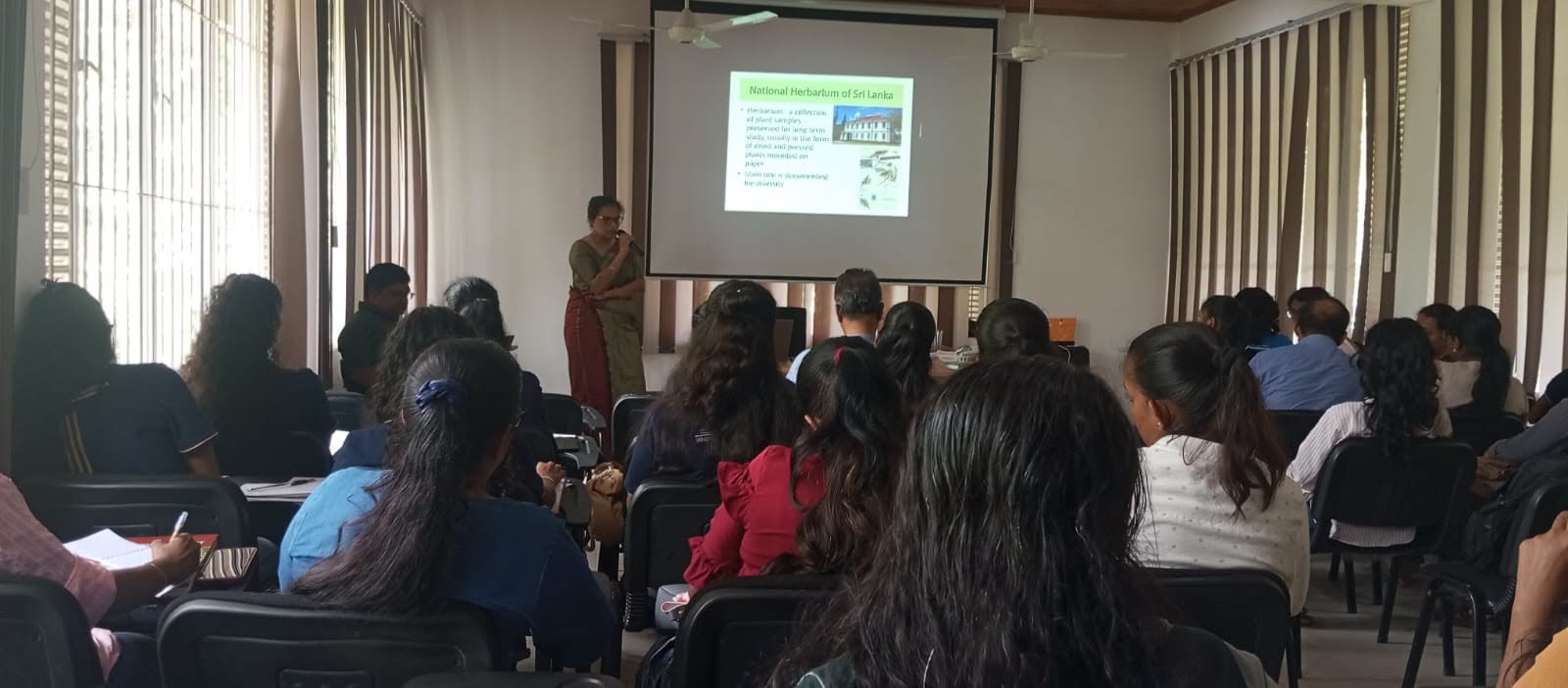
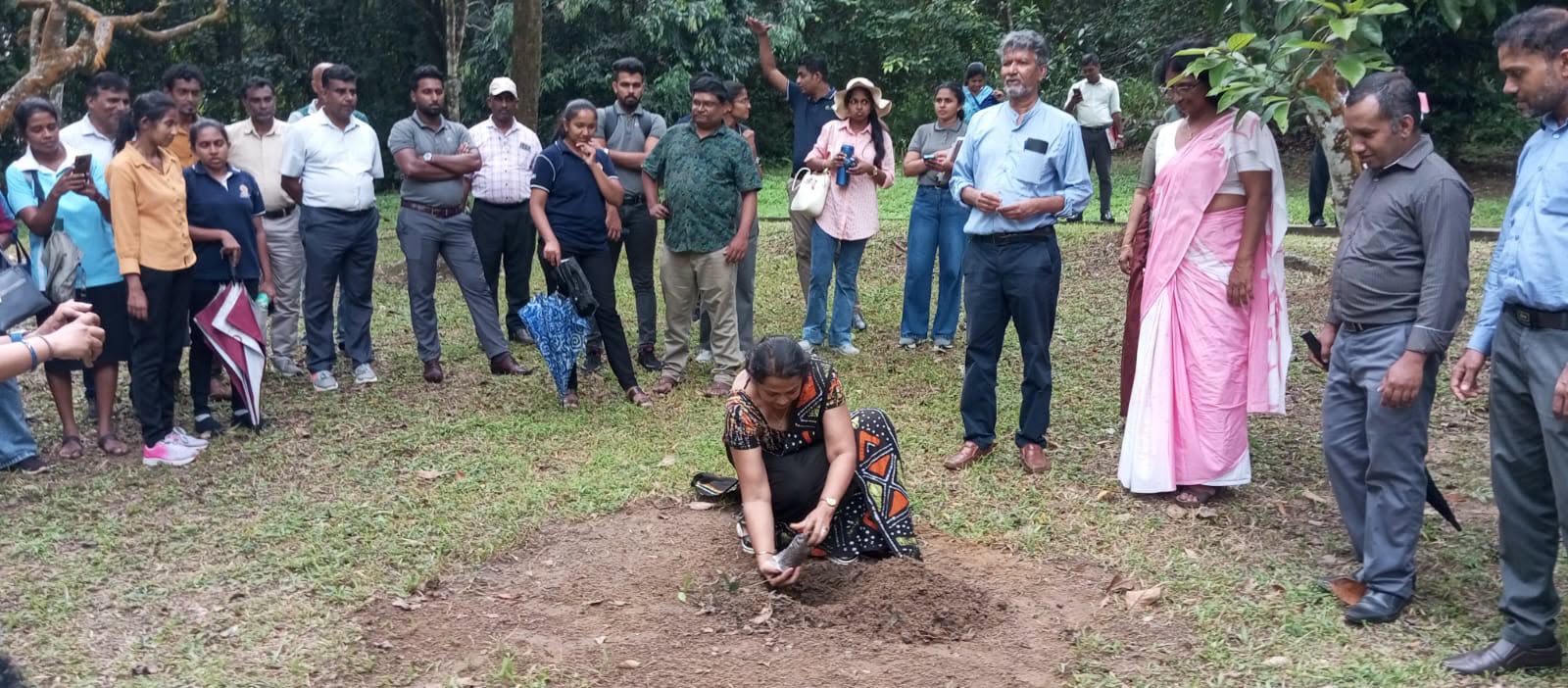
The Public Officials Awareness Programme on the National Red Data List organized by the Ministry of Environment, the Department of National Botanic Gardens and the National Institute of Basic Studies was held on 21st August 2026 at the Seethawaka Botanic Gardens Auditorium in Illukumwi, Avissawella.
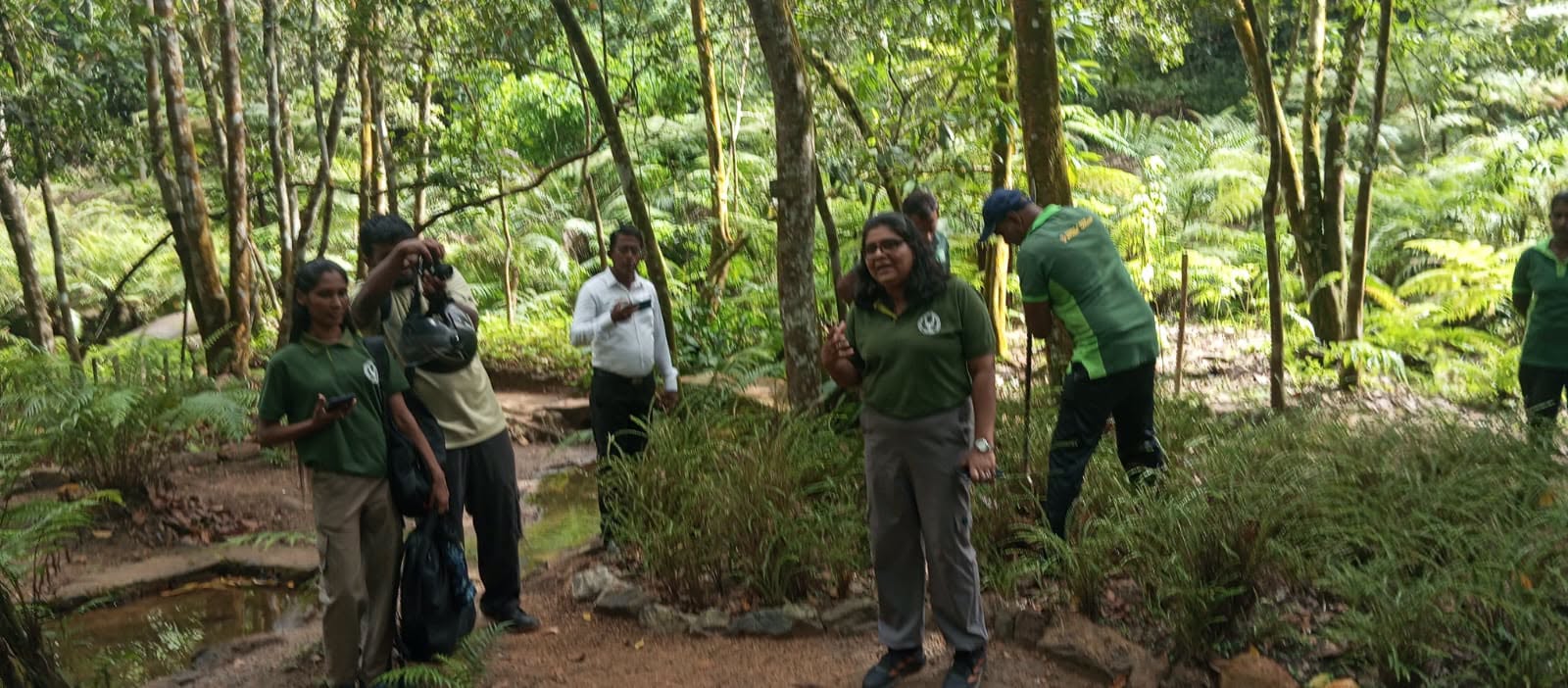
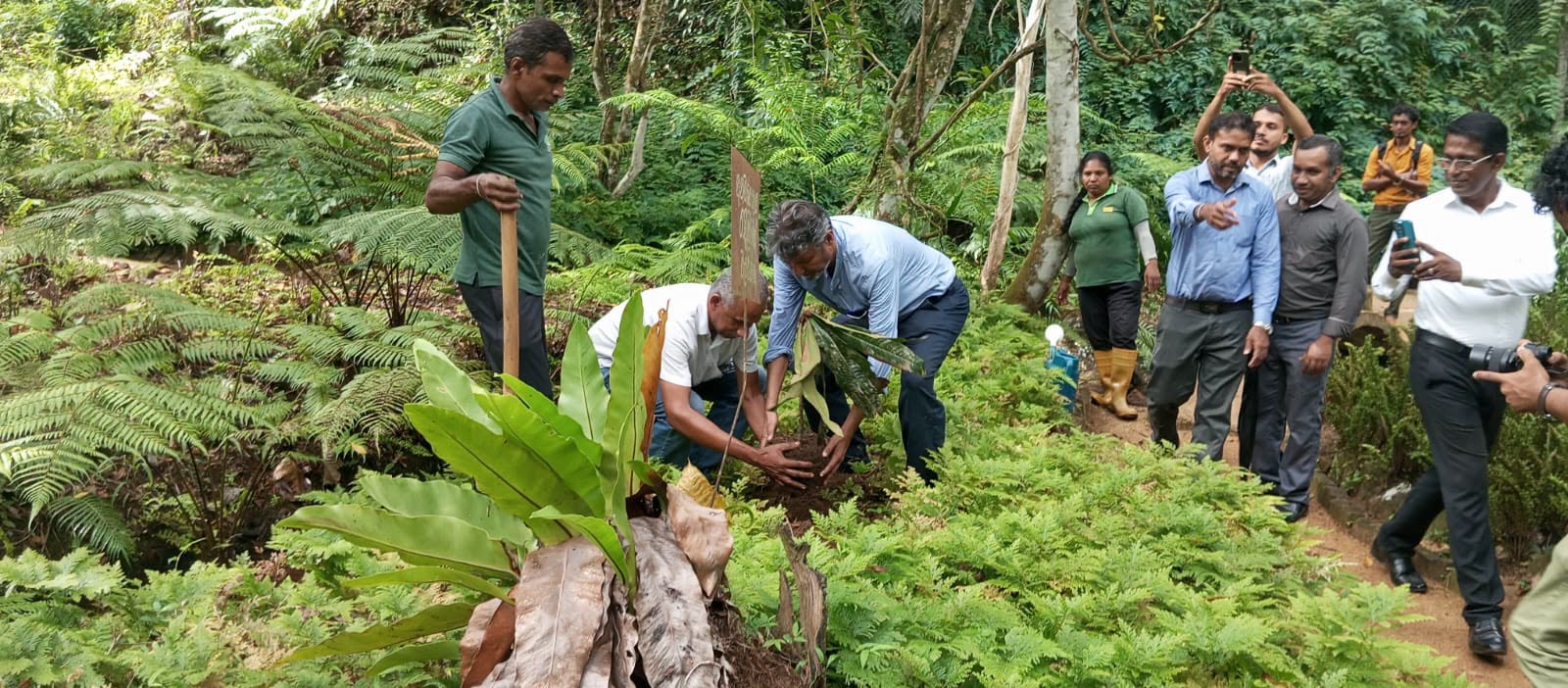
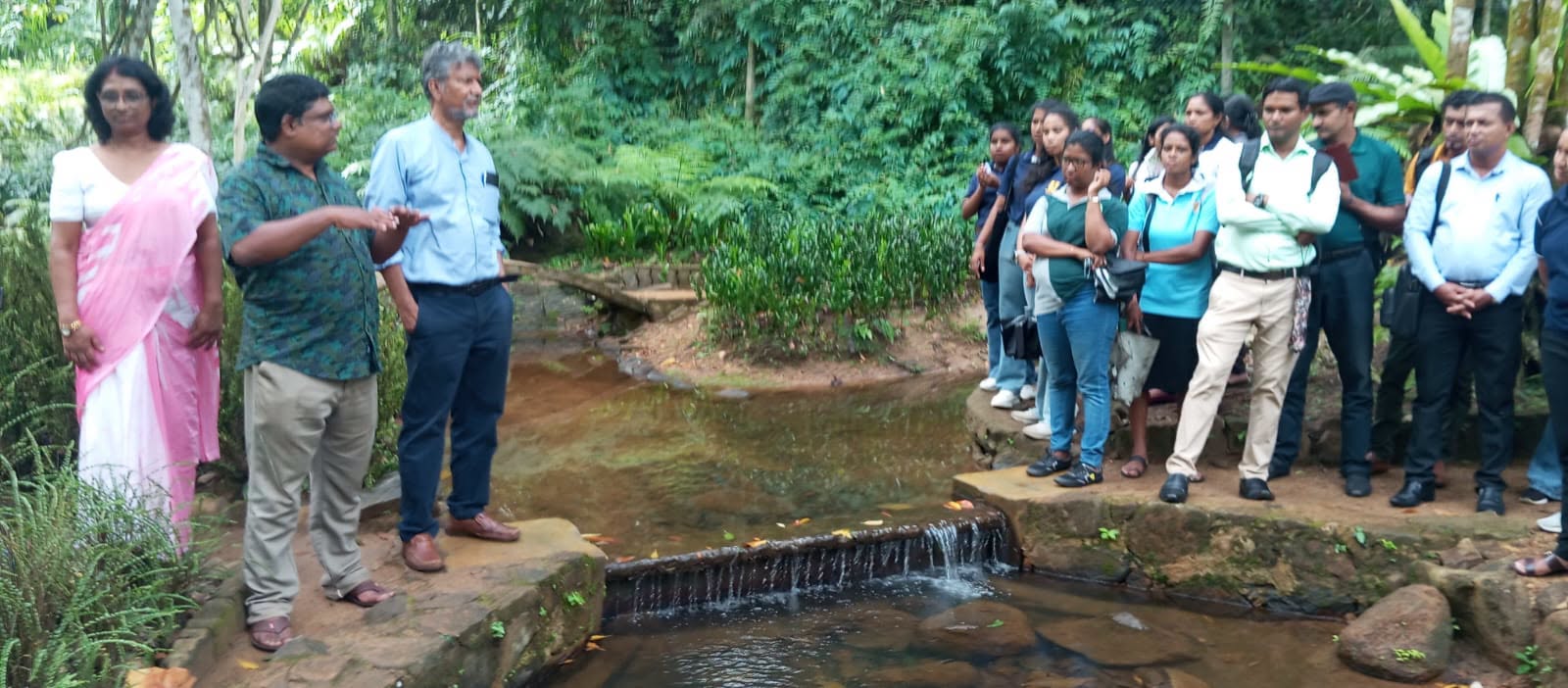
The programme included awareness raising of officials, field studies on endemic plants and their propagation and animal behavior in the park, and planting of threatened and endangered plants.
The inaugural lecture was delivered by Professor Cyril Wijesundara, Research Fellow of the Plant Taxonomy Conservation Group of the National Institute of Basic Studies. He spoke about biodiversity, the importance of conservation and the classification of forests in Sri Lanka, as well as the threats to plants and animals in montane and sub-montane tropical forests.
The professor also said that it is a myth that red data is destined to become extinct and that a plant that is a red data will be removed after conservation and propagation. Currently, there are 5 parks in Sri Lanka, of which the Haggala Park in Peradeniya and the Henarathgoda Park in Gampaha are the oldest, and the Seethawaka Wet Zone Botanical Garden, which was opened in 2008, was opened in 2015, and the first dry zone botanical garden in Sri Lanka was opened in Mirijjawila, Hambantota in 2006 and opened in 2013. The officials were informed that this dry zone botanical garden conserves dry zone plants and the Seethawaka Botanical Garden conserves wet zone plants.
Dr. Achala Attanayake, participating in the second lecture, explained what a botanical garden is. Conducting scientific research that maintains a documented plant collection, maintaining conservation specimens, the importance of maintaining places with facilities for study, how botanical gardens can intervene in the preparation of the National Red Data List, and the National Herbarium, which is managed by the Biodiversity Unit of the Ministry of Environment and the Department of Botanical Gardens, was discussed.
Dr. Himesh Jayasinghe, a plant expert at the Institute of Basic Studies, also spoke. Knowledge was also provided to officials and scholars about the plants found in the Seethawaka Botanical Garden under the field study of the garden on endemic plants and the propagation of invasive species and animal behavior.
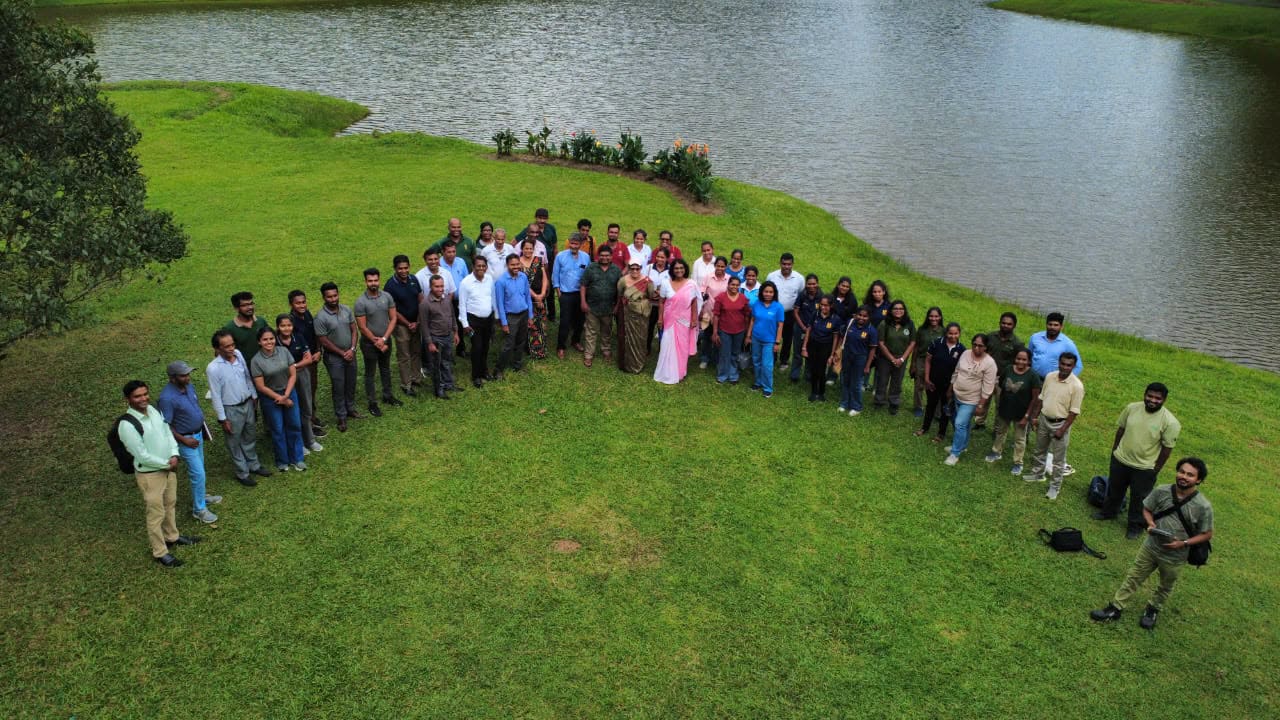
Environmental officers and other officers from the Divisional Secretariats of Padukka, Seethawaka, Homagama in the Colombo District, Eheliyagoda, Kuruwita, Kiriella in the Ratnapura District, Dehimbita and Deraniyagala in the Kegalle District, officers from the Forest Service offices in those areas, students studying tourism management courses at the Vocational Technology University in Batangala, Panawala, and officers from the private sector companies Hayleys and Hemas who are interested in the environment participated in this programme.